
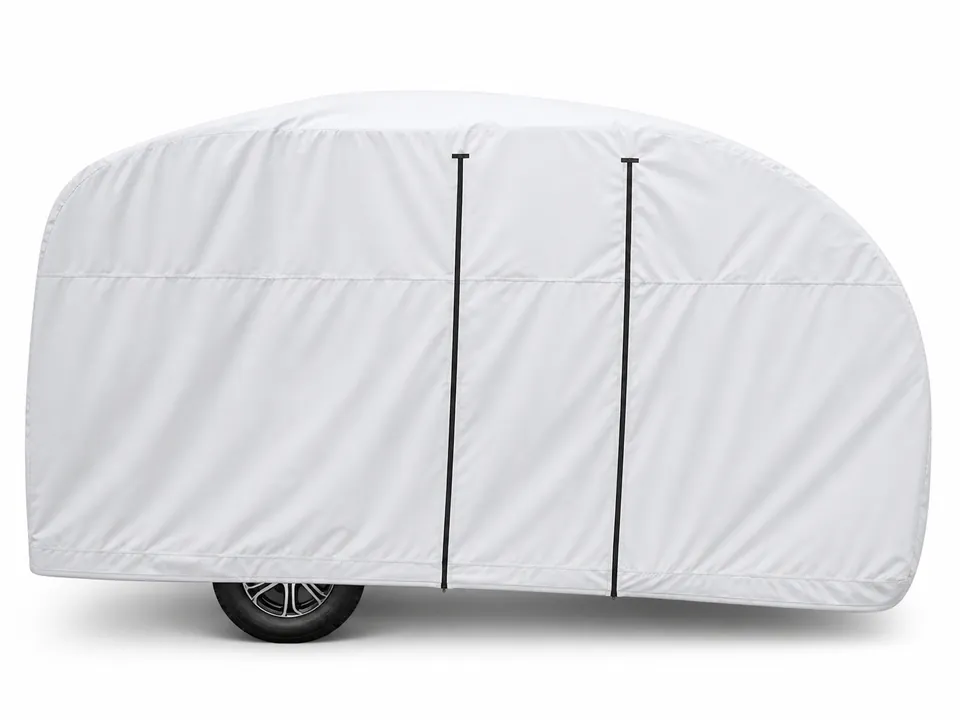
A cover lives through UV, grit, heat, and wind. Here is how to think about fabric, seams, fit, and the small details that extend service life.
01
The best cover is not the heaviest cover
A trailer cover has to shield the finish while staying manageable enough that one person will actually use it. Weight matters, but so do hand, breathability, abrasion resistance, and how the fabric behaves when it is folded cold. A cover that is difficult to install tends to spend more time in the garage than on the trailer.
Start with the exposure. A seasonal driveway cover has different needs than a cover that travels between desert dust, coastal salt, and wet mountain storage.
- Choose protection for the exposure, not an abstract weight number.
- Ventilation reduces trapped moisture under long-term storage.
- Soft contact zones matter around windows, graphics, and trim.
02
Fit is a performance feature
Loose fabric flaps. Flapping fabric wears itself and anything it touches. A tailored cover keeps the wind from finding a long unsupported span, while measured access points keep straps and buckles from becoming pressure points.
Look closely at corners and the lower edge. Those are the places where a universal cover usually gives up first because the shape is doing more work than the pattern allows.
03
Store the cover clean and dry
A cover can protect a trailer and still be damaged by the way it is stored. Brush off grit before folding, let condensation leave the fabric, and avoid compressing it wet in a sealed tote. If a repair is needed, make it while the tear is small and the material is easy to handle.
PahaQue builds covers around the object they protect. Browse the cover collection for current fits, then keep your trailer dimensions and photos ready if the shape is unusual.
Keep moving the project forward
Shop trailer covers
Find the current PahaQue gear or bring us the dimensions, failure, or awkward requirement behind your next shelter system.
Follow the threadFiled January 10, 2025 / Jeff Basford
Back to all field notes