
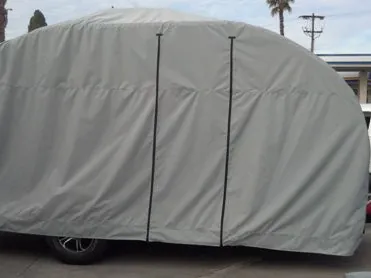
A cover pattern begins at the corners, not the marketing length. Use this checklist to capture the shape that matters.
01
Measure the body that needs protection
Record overall length, width, and the highest roof point, but also note where those measurements happen. A trailer may be widest at the fenders and tallest at an air conditioner. Those changes determine the cover's ease and its pressure points.
Measure with permanent accessories installed. Spare tires, vent caps, roof racks, and solar panels all change the shape the fabric must clear.
- Overall length from the furthest fixed point.
- Width at the widest body or fender point.
- Height from ground to the highest installed component.
02
Map the corners
Write down whether each corner is square, rounded, or tapered. Take photos from all four corners and one straight-on shot of each side. A cover can be the right length and still fit poorly because the rear radius was assumed instead of measured.
Note door locations and any access panel you want to use while covered. A cover that supports the way you maintain the trailer is more useful than one that only looks tidy.
03
Leave room for the cover to breathe
A cover needs enough ease to install without dragging across trim, but not so much that it becomes a sail. Vent points and soft interior contact zones help protect the finish over long storage periods.
Keep the completed measurement sheet with your trailer title and service records. It will be useful again when you replace a strap, add an accessory, or ask about a custom fit.
Keep moving the project forward
Compare trailer covers
Find the current PahaQue gear or bring us the dimensions, failure, or awkward requirement behind your next shelter system.
Follow the threadFiled September 26, 2024 / Jeff Basford
Back to all field notes