
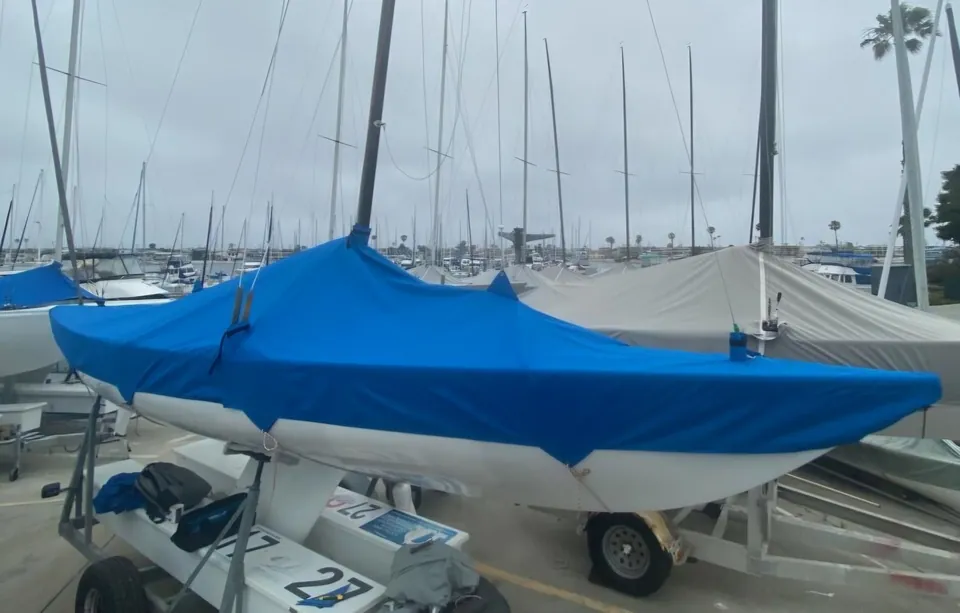
Fabric selection is a chain of tradeoffs between abrasion, UV, weight, hand, cleanability, and the shape the cover must hold.
01
Name the exposure before the material
Outdoor fabric is not one category. A cover under desert sun sees a different life than a protective sleeve in a wet service yard. Record UV, standing water, grit, oils, temperature swings, and how often the cover is handled before comparing specifications.
The hand of the fabric matters too. A stiff material may resist abrasion while creating hard folds and pressure points. A softer material may pack beautifully but need reinforcement at every contact zone.
02
Seams carry the story
A fabric can have impressive numbers and still fail at the seam. Reinforcement, stitch choice, binding, and load direction determine whether a panel stays stable around a corner or zipper. Think about how a user pulls the cover on, not just how it sits once installed.
Water resistance is also a construction decision. Drainage, seam placement, and flap geometry often do more practical work than chasing a single coating number.
03
Prototype the handoff
Before committing to production, make a physical sample that includes the difficult edge, the closure, and the main contact point. Let the actual user install it and remove it. That test catches material choices that look strong on a table but fight the workflow.
For custom and OEM programs, PahaQue can help translate those observations into a buildable sewn system through our capabilities practice.
Keep moving the project forward
Talk through a cover
Find the current PahaQue gear or bring us the dimensions, failure, or awkward requirement behind your next shelter system.
Follow the threadFiled March 8, 2024 / Jeff Basford
Back to all field notes