
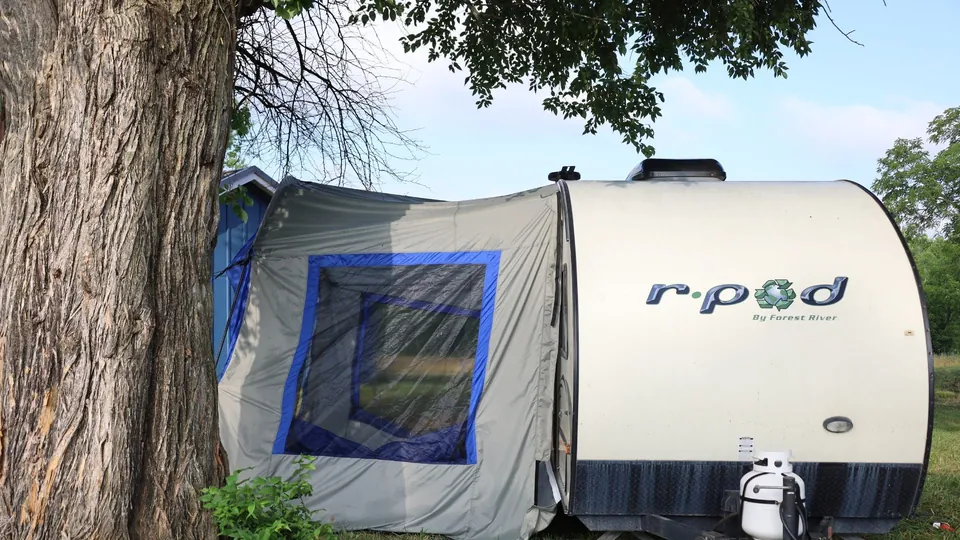
A compact trailer can feel generous when the entry, kitchen, shelter edge, and wet gear zone are given distinct jobs.
01
Create a front door, not a maze
Start with a straight path from the tow vehicle side to the trailer door. Keep the first two steps clear of bins, guy lines, and chair legs. The small space feels calmer when arrival and departure have one obvious route.
Place frequently used items at the edge of that route, not in the center. A folding table can become a landing surface without becoming a gate.
02
Let the awning define the room
Use the awning edge as an outdoor wall. Put the cooking surface toward the open side for ventilation, keep food storage out of the rain line, and reserve the deepest shade for a chair or dry seating. A shelter works harder when the furniture follows its geometry.
On a small site, choose one flexible piece over three dedicated ones. A low table can be prep space, a step, or a place to stage a wet bag during pack-up.
03
Keep the wet zone honest
Shoes, rain shells, and damp towels need a place that is not the bed or the galley. A narrow mat under the awning edge is often enough if it has a clear boundary and can be lifted to dry.
Good small-towable camping is less about bringing less and more about making each surface easy to understand.
Keep moving the project forward
Find shade and awnings
Find the current PahaQue gear or bring us the dimensions, failure, or awkward requirement behind your next shelter system.
Follow the threadFiled July 11, 2024 / Jeff Basford
Back to all field notes