
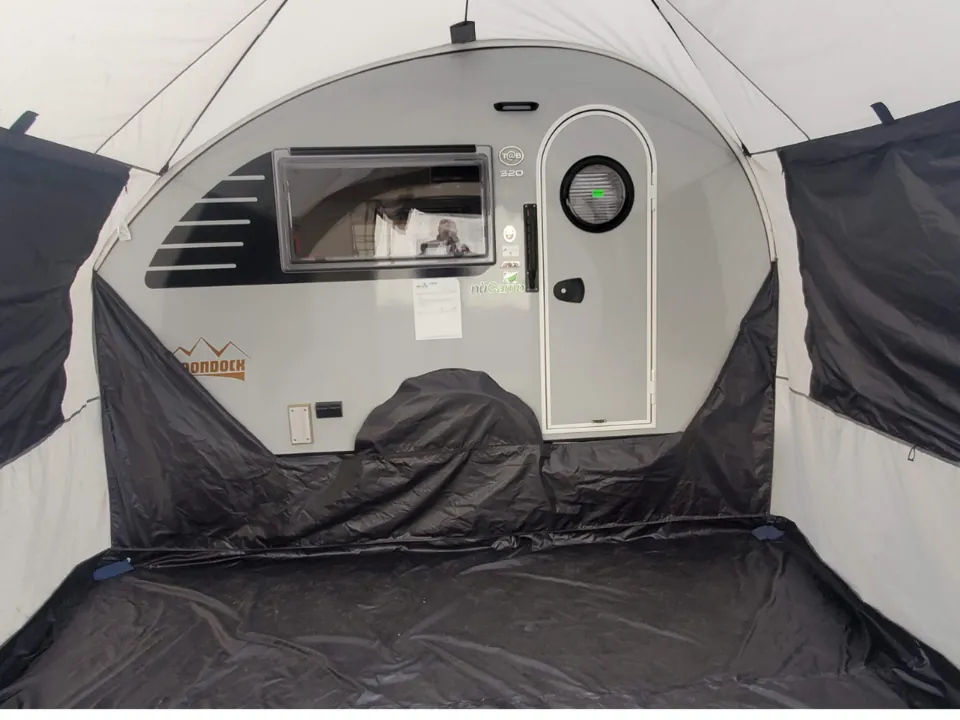
The best shade is not a sealed room. It is a measured layer that keeps the galley useful and the air moving.
01
Shade follows the sun
A teardrop awning should give you room to work as the sun moves, not just shade the trailer wall at noon. Pay attention to the morning galley setup and the late-afternoon angle when you decide projection and pole positions.
A slightly deeper canopy can be useful if the edge remains high enough to preserve sight lines and airflow. Shade is a geometry problem before it is a fabric color choice.
02
Leave an air path
Keep the low edge open when conditions allow. Cross-breezes remove heat and cooking moisture, while a sealed canopy can trap both. If you add a side panel, treat it as a weather tool that changes the airflow, not as a permanent wall.
Check the hatch and kitchen doors through their full swing. The awning should protect the work zone without turning every opening into a snag.
03
Set up for the next meal
Place poles and guy lines where the cook will not step backward into them. Keep the first cooking surface under cover but close enough to the open edge for ventilation. A good setup makes the right action the easy action.
PahaQue awnings are shaped around trailer use rather than generic patio dimensions. Browse the live catalog for current options.
Keep moving the project forward
See awning options
Find the current PahaQue gear or bring us the dimensions, failure, or awkward requirement behind your next shelter system.
Follow the threadFiled June 7, 2024 / Jeff Basford
Back to all field notes