
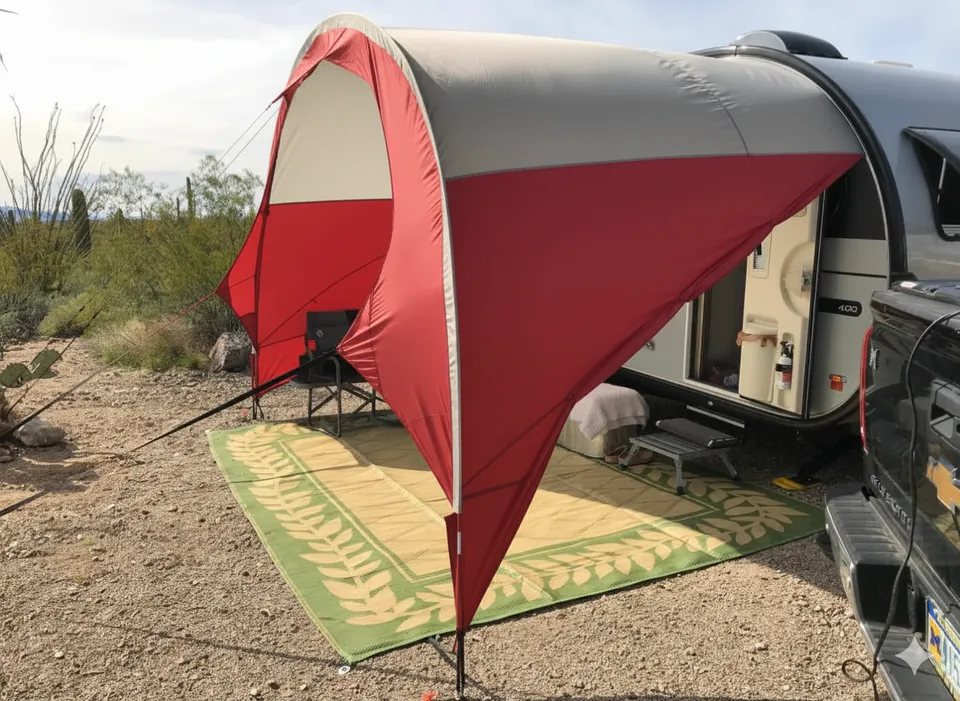
The fabric is only as reliable as the path from seam to trailer. Learn how to inspect attachment points before the first gust tests your awning.
01
Follow the load through the fabric
Start at the rail, track, or sewn attachment and trace the force toward the canopy edge. Reinforcement should spread the pull rather than concentrate it at one stitch line. Look for abrasion, pulled thread, and a rail that has begun to flex.
If an attachment point is difficult to seat, stop before tensioning the outside edge. A crooked starting point can make every later adjustment look like a fabric problem.
- Inspect reinforcement and thread.
- Seat the attachment before adding tension.
- Look for rail movement or sharp edges.
02
Match pole angles to the ground
The outside pole should carry load into a stable patch of ground, not into a walkway or a loose stake. Set the pole angle first, then place the guy line so its pull supports the seam instead of twisting the corner.
Soil changes the answer. A stake that works in firm ground can pull free in sand, while an overbuilt stake beside a buried rock can send too much force back into the canopy.
03
Make pack-down part of the design
An awning earns trust when it is easy to lower before conditions turn. Keep the pole sections together, make the storage bag reachable, and decide in advance which edge comes down first. Good habits reduce the temptation to leave fabric loaded in a rising wind.
Use the PahaQue awning range as a fit reference, then keep your attachment measurements and photos ready for any unusual rail or trailer shape.
Keep moving the project forward
Browse trailer awnings
Find the current PahaQue gear or bring us the dimensions, failure, or awkward requirement behind your next shelter system.
Follow the threadFiled September 28, 2026 / Jeff Basford
Back to all field notes