
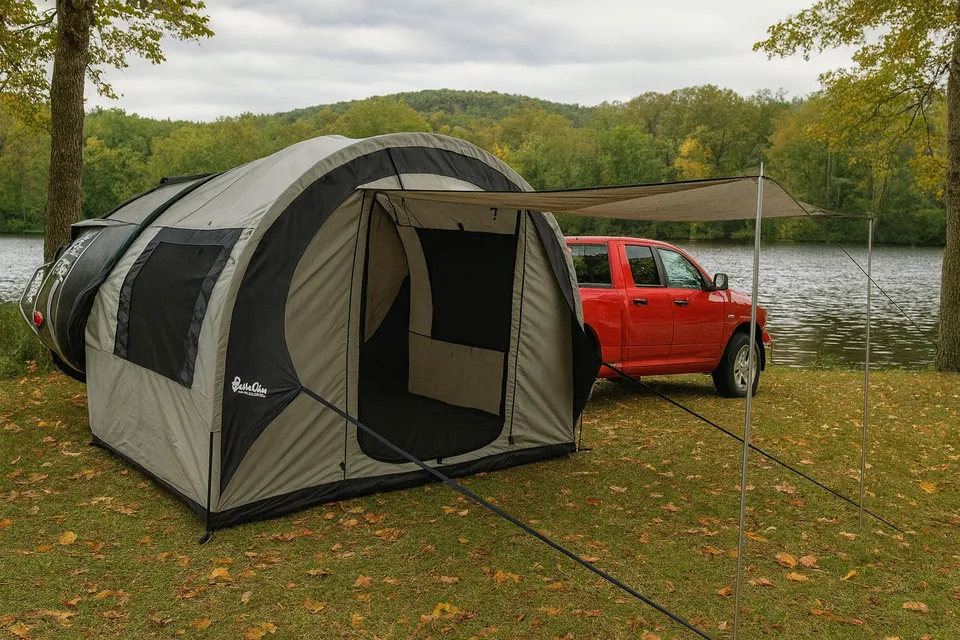
Shade, access, tension, and packability are the quiet measures of an awning that earns its place on a towable.
01
A canopy should earn its footprint
An awning takes storage space and setup time, so it should return useful room. The best measure is not its maximum square footage; it is how many ordinary camp tasks it makes easier. Can you cook, change shoes, sort gear, and sit out a short shower without moving everything?
On a compact trailer, a shaped awning can create more comfort than a larger square canopy because it places shade where the body actually needs it.
02
Details that save a setup
Look for clear pole sleeves, reinforced attachment points, hardware that can be handled with cold fingers, and a bag that accepts the shelter without a wrestling match. These details do not photograph as dramatically as a large canopy, but they decide whether the awning becomes a habit.
A useful design also leaves room for adjustment. Campsites are not level drawings, and a little tolerance can protect the fabric when the ground refuses to cooperate.
03
Make the last day easy
The final test is a tired pack-up after breakfast. If the awning can be detached, folded, and stored without blocking the trailer door, it has been designed around ownership rather than a showroom moment.
PahaQue builds trailer shelter gear with that repeat use in mind. Start with the awnings in the live shop, or reach out through capabilities when the trailer shape is outside a standard fit.
Keep moving the project forward
Browse PahaQue awnings
Find the current PahaQue gear or bring us the dimensions, failure, or awkward requirement behind your next shelter system.
Follow the threadFiled January 19, 2024 / Jeff Basford
Back to all field notes