
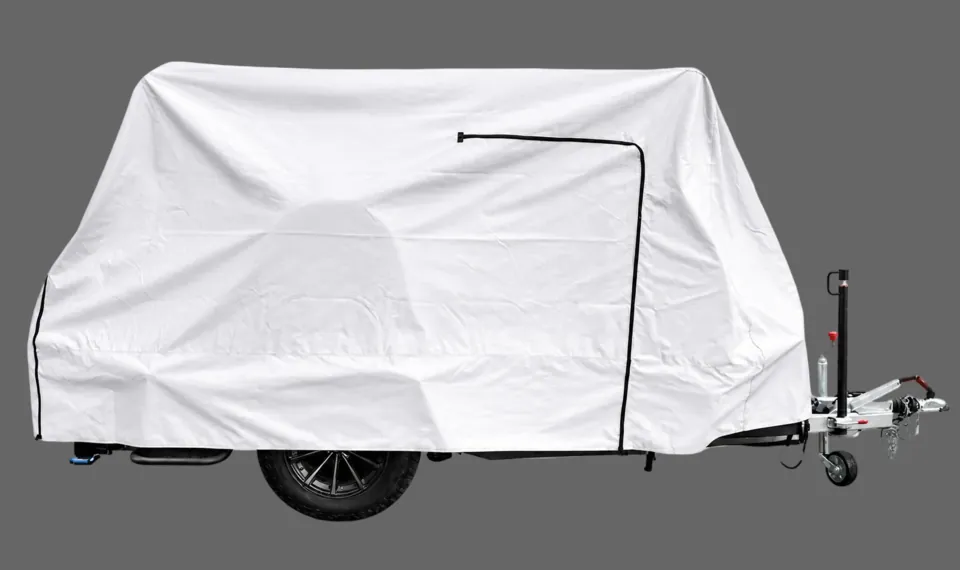
A small tear is information. Learn when a patch restores service and when the cover's pattern or material has reached its limit.
01
Read the damage pattern
A single puncture with healthy surrounding fabric is usually a repair conversation. Repeated tears along the same edge, brittle material, or a seam that keeps opening tells a different story. The cover may be carrying loads its pattern was never built to distribute.
Clean the area and photograph the damage in context. A close-up shows the hole; a full-side photo shows whether the whole cover is riding or flapping incorrectly.
02
Check the high-contact zones
Look at corners, mirrors, fenders, vents, and any strap crossing a sharp transition. Abrasion is often slow and quiet until the fabric suddenly fails. A soft contact patch can extend life when the base material is still flexible and strong.
If UV has made the fabric stiff or translucent, patching one point may only move the failure down the panel. Test the surrounding area gently before promising another season.
03
A different shape may need a new pattern
Added racks, solar panels, or a changed spare-tire mount can make an older cover fundamentally wrong. In that case, a new pattern can be more economical than repeated repairs and straps.
Our capabilities team works on protective covers and technical textile assemblies. Bring measurements, photos, and the job the cover needs to do.
Keep moving the project forward
Discuss a sewn system
Find the current PahaQue gear or bring us the dimensions, failure, or awkward requirement behind your next shelter system.
Follow the threadFiled May 3, 2024 / Jeff Basford
Back to all field notes